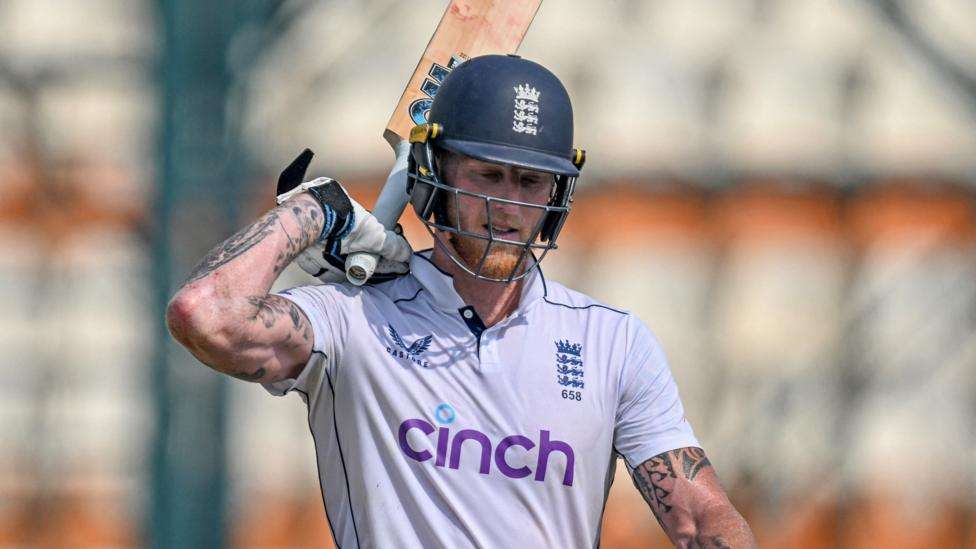
It usually means good for batting, though that doesn’t
always produce good cricket.
Sure, England’s 823-7 declared on the first-Test slab of
concrete in Multan was fun for its silliness, it just wasn’t great viewing for
the lack of contest between bat and ball.
The opposite of a good pitch - being very careful not to say
'bad pitch' – can make a more intriguing spectacle. See Pakistan’s win in the
second Test. I hope you’re keeping up.
Maybe the best way to think of a good pitch is the one that
makes it most likely for the best team to win. On a true surface, the better
batters are less inclined to make a mistake, the superior bowlers more armed
with the skills to take wickets.
With their creation for the second Test, the reused,
recycled and resuscitated pitch from the first, Pakistan acknowledged they
needed some help. It was, essentially, a massive compliment to England and
their swashbuckling style.
By the time the series was level at 1-1, the pitch was nine
days old. Between the first and last deliveries bowled on that 22-yard strip of
dirt, it comes to 12 days.
In that period, Thomas Tuchel has held talks with the
Football Association, been appointed England manager and apologised for being
German. England have lost Ashes series in shorter amounts of time.
To put the transformation into context, data analysts
Cricviz usually rate Multan as the second-flattest pitch on the planet. By day
three of the second Test, the Multan surface was ranked as the most difficult
anywhere in Pakistan since Test cricket returned to the country in 2019.
In the same timeframe, it was ranked in the top 10% for
toughest pitches in 190 Tests played across the world.
The pitch created a huge element of chance, tantamount to,
yet not quite the same, as the flick of a coin. Captains Shan Masood and Ben
Stokes both acknowledged the importance of the toss, with Stokes suggesting
after the match Pakistan could have looked “silly” if their plan backfired.
Stokes also admitted there is nothing unusual in employing
home advantage and England often do the same – the Trent Bridge Ashes Test of
2015, Stuart Broad’s 8-15, is a famous example.
Perhaps it is a comment on the relative strength of
Pakistan’s Test cricket at the moment that the conditions in Multan are being
shrugged off. It can only be imagined what the reaction might have been had the
same thing been done in India. As it stands, England have not complained,
either publicly or privately.
On the toss, England could do with getting better, and
quickly. The two at Multan made it seven losses in a row. Stokes said he’ll
carry on calling tails for the decider in Rawalpindi. Maybe he should spend the
extra day off practising.
But. And this is a big but. Any suggestion the second Test
was only decided by the coin would be wide of the mark.
England had their chances and wasted them in familiar
fashion. Not quite a greatest hits, just an EP.
The non-review when Muhammad Rizwan edged Matthew Potts in
the first innings was a continuation of some dismal recent use of DRS. Rizwan
had six and went on to make an important 41.
England were arguably favourites when they reached 211-2 in
their first innings, then lost eight wickets for 80 runs. From that point until
the end of the match, England were 224-18, which is extreme on any surface.
The final nail was Salman Agha being dropped by Jamie Smith
and Joe Root in the same Brydon Carse over on the third afternoon.
Stokes himself was as angry as he has ever been on the field
during his tenure as captain and later apologised to the team in the dressing
room. That says something about how important those two moments were. For
wicketkeeper Smith, it was the biggest error in his short and impressive Test
career to date and a situation to keep an eye on.
If it sounds like a pile-on of the tourists, it’s not the
intention, because there were positives too. Carse looks a real find,
potentially a huge asset for an Ashes in Australia. Stokes’ return from a
hamstring injury was welcome, particularly for Shoaib Bashir, who grew in
stature with the all-rounder back at the helm.
More broadly, this was another Test on the subcontinent
where England have been outspun, though after next week it will not be a
problem they will have to consider for some time.
Since the beginning of 2021, England have had five series in
Asia. Two here, two in India and one in Sri Lanka. This decade, their eight
wins on this continent is more than they managed in the 1970s, 80s and 90s
combined. Their next trip is not until two Tests in Bangladesh in early 2027.
And so to Rawalpindi, and a proper series decider – one
where the teams are level going into the final match. England haven’t had one
of those since the home series against South Africa in 2022, the first Bazball
summer.
One wonders when the Rawalpindi groundsman got a call to
change his previous plans for the pitch.
In the first of two Tests against Bangladesh on that ground
in August, Pakistan did not play a frontline spinner. Now there might not be a
need for a seamer, with Masood confirming he wants another turner.
If a fresh pitch had been prepared, it may soon be excavated
by a JCB.